Your Bathroom Should Feel Like the Quietest Room in the House
How to design a bathroom that feels like a private retreat, from a decor editor: lighting, tactile materials, layout tricks, and the finishing layer.
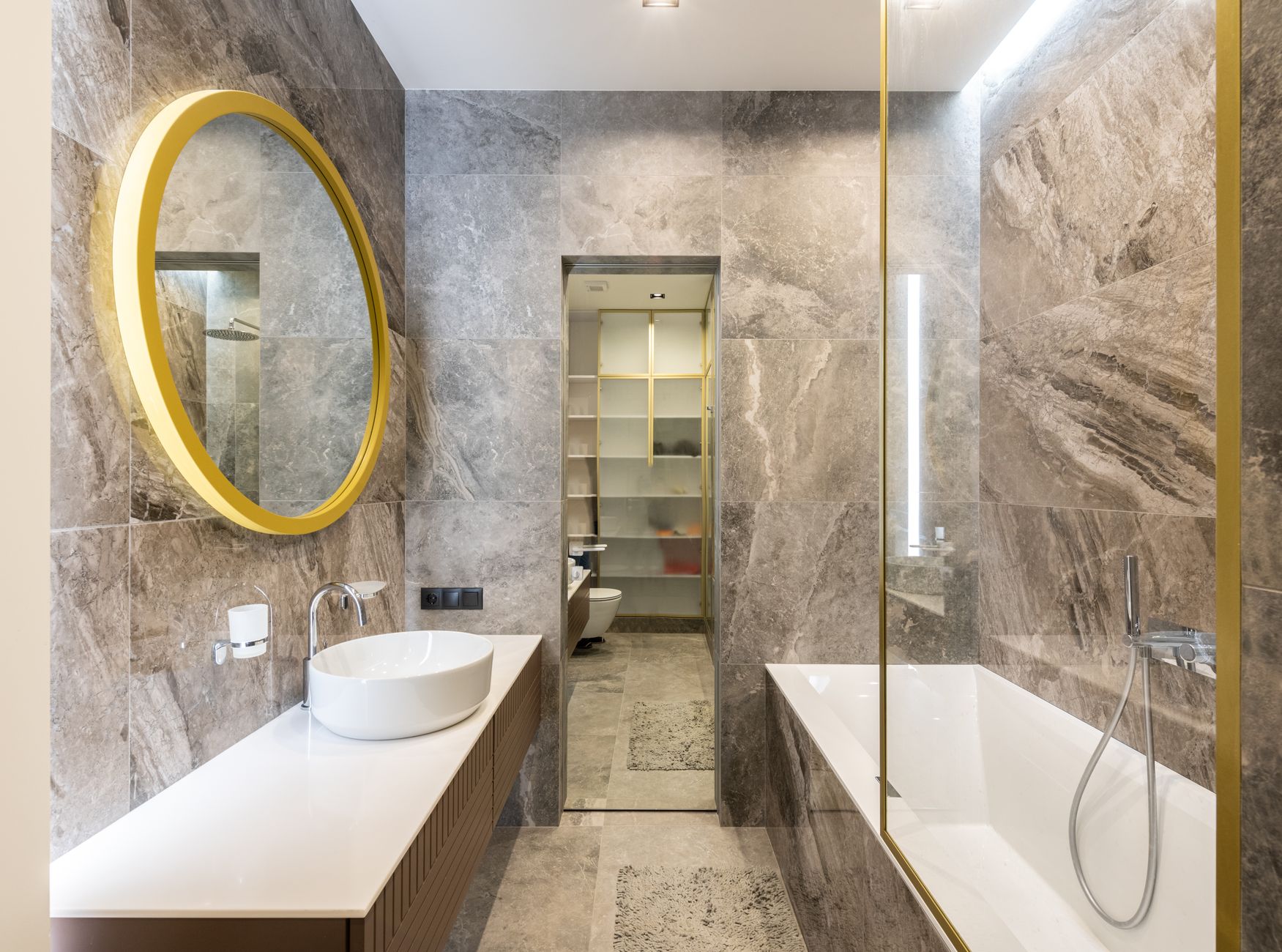
The fastest way to make a bathroom feel like a retreat has almost nothing to do with the tile. It's the light, the temperature of the materials under your hand, and how much of the utilitarian stuff you can hide. I learned this the hard way in a client's 2022 primary bath renovation, where we'd spent a small fortune on honed marble and the room still felt like a dentist's office until we swapped one 4000K ceiling fixture for a pair of warm wall sconces at eye level. The whole mood changed in an afternoon. So before you fall in love with a slab, get the invisible things right.
A retreat is a feeling, not a finish. It's the sense that the door clicks shut and the rest of the house goes quiet. You get there by designing for the body first, sight and touch and sound, and letting the pretty surfaces come second. That order matters more than any single product you'll buy.
Start With Light and Warmth, Not Tile
Most bathrooms are lit like operating rooms. One cold fixture in the ceiling, shadows under your eyes, everything flat. If you want the room to feel like somewhere you'd linger, you need layers: something warm and low for the evening, something brighter and flattering at the mirror, and a switch to move between them. I put every bathroom I style on dimmers now, no exceptions. Warm-dim LEDs that drop to around 2200K at the low end read like candlelight, and that shift alone does more for the mood than a marble upgrade ever will.
Warmth isn't only about color temperature. It's literal, too. A heated floor under bare feet on a January morning is the single most requested upgrade I hear from clients who've lived with one, and it's cheaper than people assume when you're already tearing up the floor. There's real science behind why warmth relaxes us before rest. A 2019 meta-analysis from the University of Texas at Austin found that a warm bath one to two hours before bed measurably improved sleep quality and helped people fall asleep faster, because the body cools afterward in a way that cues sleep. Your bathroom is where that ritual happens, so build for it. University of Texas at Austin
Get the light right before you spend a dollar on stone. A room lit like a spa forgives a modest material budget. A gorgeous slab under harsh light still feels clinical.


Materials You Actually Want to Touch
A retreat rewards the hand as much as the eye. That means fewer high-gloss, hard, echoing surfaces and more things with a little grip and warmth to them. Honed or leathered stone instead of polished. Unlacquered brass that ages and softens instead of shiny chrome that shows every water spot. A chunky waffle-weave towel instead of the thin hotel kind. When I'm styling a room to feel calm, I'm quietly reducing how many surfaces bounce sound and light around, because a hard, bright, echoey room reads as tense no matter how expensive it is.
Wood belongs in here more than people think. A teak stool, an oak vanity, a small stool you'd put a folded towel or a book on. It breaks up the cold ceramic and gives the eye somewhere soft to land. And plants, real ones, in the humidity they'll happily take. A pothos or a fern near the shower does something to a bathroom that no accessory can fake.
My friend tried the unlacquered brass thing after I wouldn't stop talking about it, and honestly she called me two weeks in slightly panicked because the tap had started to go blotchy and dark around the base. I'd forgotten to warn her that the patina looks worse before it looks good, sort of a gangly teenage phase, and if you scrub it with anything abrasive you reset the whole clock. She left it alone. Six months later it's this gorgeous mellow gold and she takes credit for the idea now. So, fair warning, living finishes ask for a little faith and a lot of not-touching.



The Layout Moves That Buy You Privacy
The word retreat implies separation, and the best bathrooms are quietly zoned even when they're small. The move I reach for most is a wet room or a half wall that gives the toilet its own alcove, out of the sightline from the door. You don't need a mansion for this. A single partial wall, a change in floor level, or a frameless glass panel can carve one open room into a sequence of small, deliberate spaces. That sequence is what makes a modest square footage feel considered instead of cramped.
If you're renovating with resale in mind, the primary bath is one of the few rooms where restraint pays off in more than one currency. Buyers respond to it, and so do photographs. I've written before about the paint colors that actually photograph well in a listing, and bathrooms are where that lesson bites hardest, since a warm neutral on the walls reads as serene in a listing shot while a cool gray goes morgue-blue under a phone camera. For the bigger picture on where your money returns, this piece on the renovations that genuinely add resale value versus the ones that don't is worth reading before you sign off on a layout that moves plumbing.
One honest caveat. The open, doorless wet-room look is stunning in a magazine and genuinely divisive in real life. In a cold climate, or a house with only one full bath, an open shower with no containment can feel drafty and splash everywhere, and I've had clients quietly regret it. It photographs beautifully. It doesn't always live beautifully. Know which one you're actually optimizing for.


The Finishing Layer: Scent, Sound, and Storage
Here's where a bathroom crosses from renovated to retreat, and it's almost all things you can add without a contractor. Clutter is the enemy of calm, so the real luxury is enough closed storage that nothing sits on the counter except maybe one beautiful object and a stack of folded towels. A single tray. A tumbler for toothbrushes. Everything else behind a door. When I stage a bathroom for a shoot, clearing the counter does more than any prop I could add.
Then you layer the senses:
- Scent: one considered candle or a reed diffuser in something warm and green, not a plug-in that screams synthetic vanilla.
- Sound: a small waterproof speaker for low music, and if you have the budget, an exhaust fan rated quiet enough that it doesn't roar.
- Touch points: a bath mat with real weight, a hook for a waffle robe, a stool within arm's reach of the tub.
People are spending on this on purpose now, not just fixing what's broken. The 2023 U.S. Houzz Bathroom Trends Study found that a large share of renovating homeowners prioritized the shower and comfort upgrades over pure square footage, which tracks with everything I see in the field. The retreat is the point now, not the resale spreadsheet, though the two happen to agree more often than you'd expect.
Do one thing tonight, before any renovation: put your main bathroom light on a dimmer and swap the bulb for a warm-dim LED around 2700K or lower. It's a fifteen-minute job, costs less than a takeaway dinner, and it's the closest thing I know to an instant retreat. Live with it for a week. You'll feel the difference before you've spent a cent on tile.
The Salon
Frequently asked questions
What's the cheapest change that makes a bathroom feel more luxurious?
Swap your overhead bulb for a warm-dim LED and put it on a dimmer. Cool, bright ceiling light is what makes most bathrooms feel clinical, and softening it costs almost nothing while changing the whole mood of the room.
Do heated floors really matter or are they a gimmick?
They matter, especially in cold climates. Warmth underfoot is one of the few upgrades clients never regret, and installation is far cheaper if you're already replacing the floor. Retrofitting later is the expensive version, so decide during the renovation, not after.
Is an open, doorless shower a good idea?
It looks incredible but it isn't for everyone. In a cold house or a home with only one full bathroom, an open wet room can feel drafty and splash beyond the shower zone. If it's your only bath, containment usually beats the magazine look.